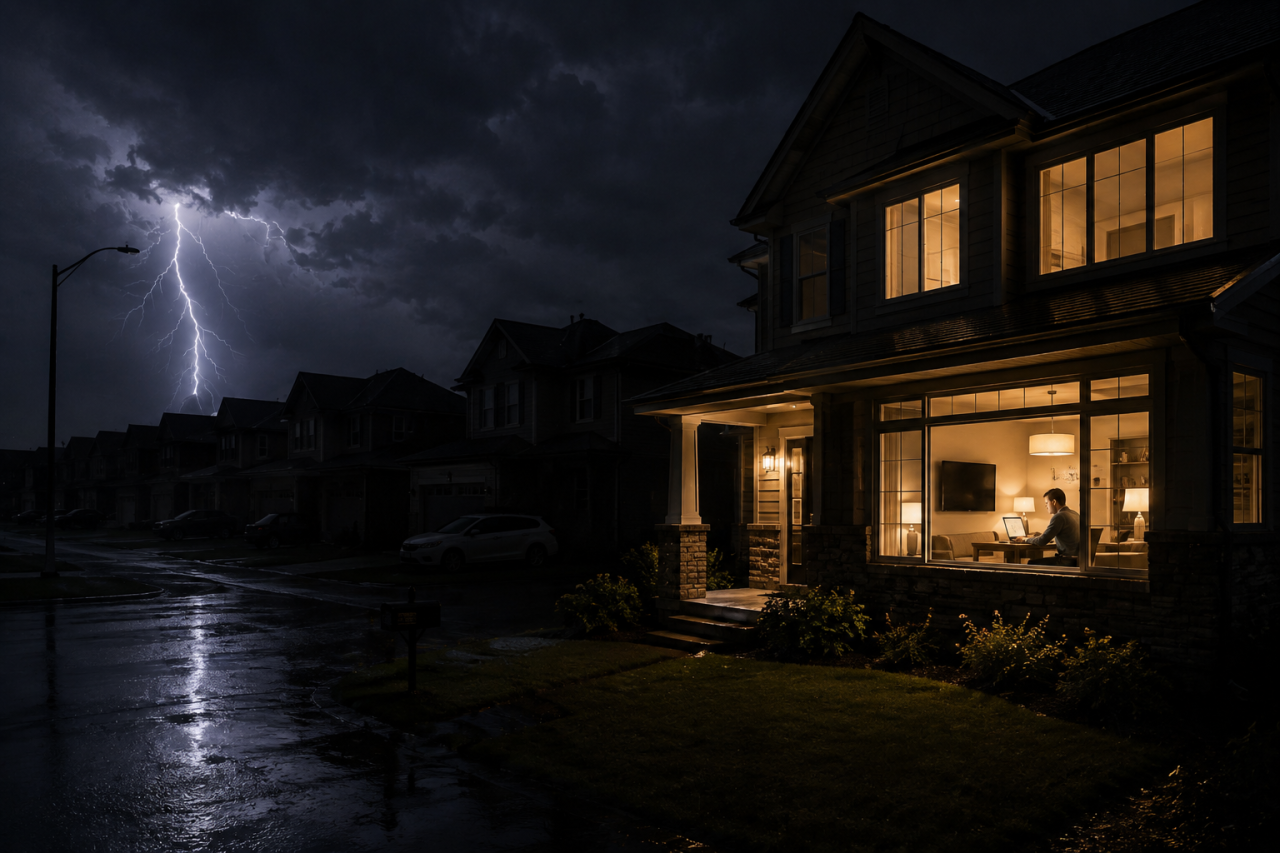
The world we’re living in feels quite precarious these days.
Wildfire smoke is clogging us up and battles over a strait in the Middle East few of us had previously heard of are resulting in way-too-big numbers at the petrol pump. Everything seems in short supply. Grocery bills mimic a hiker climbing Mount Everest. Consumer confidence is low and the world of business seems to have pressed the pause button.
We see the number and intensity of storms increasing. According to an article entitled “Severe Weather is the New Normal” in Miller Insurance’s Spring 2026 issue of Risk and Business Magazine,
“in recent years, weather has shifted from something we simply deal with to something we must actively plan for. Across Grey, Bruce, Huron, Perth, and Wellington counties, severe weather events are becoming more frequent—and the financial impacts are becoming harder to ignore.”
Before we become too much of a Debbie Downer and depression rolls in, let us remind you that even amidst what seems like chaos, there is hope.